Archaeological Fragments: Recovered Capitals
Late Romanesque – transition to Early Gothic
Late 12th century – early 13th century
Origin:
Finds uncovered during restoration works at the Monastery of Santa María la Real
Location:
Sacristy
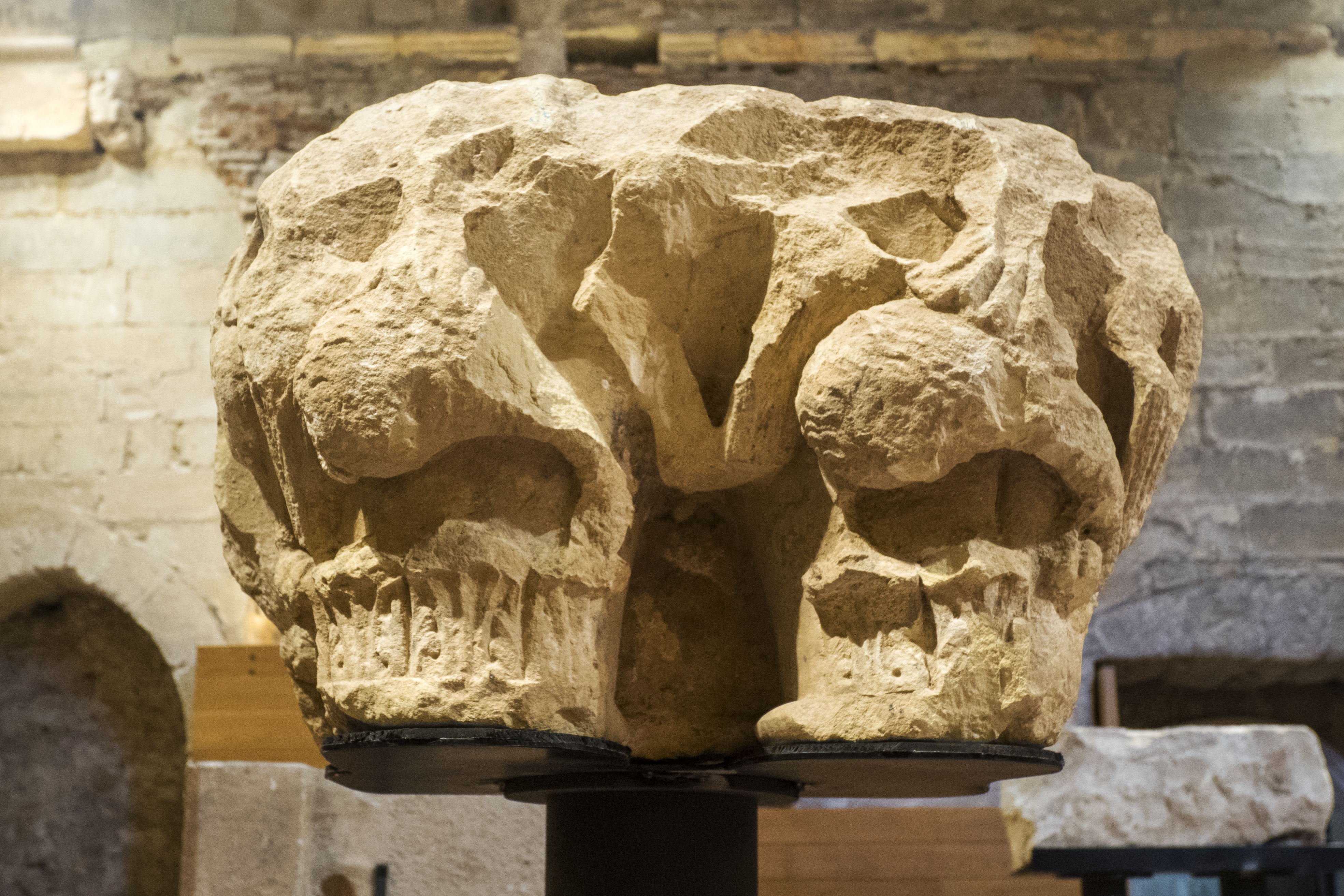
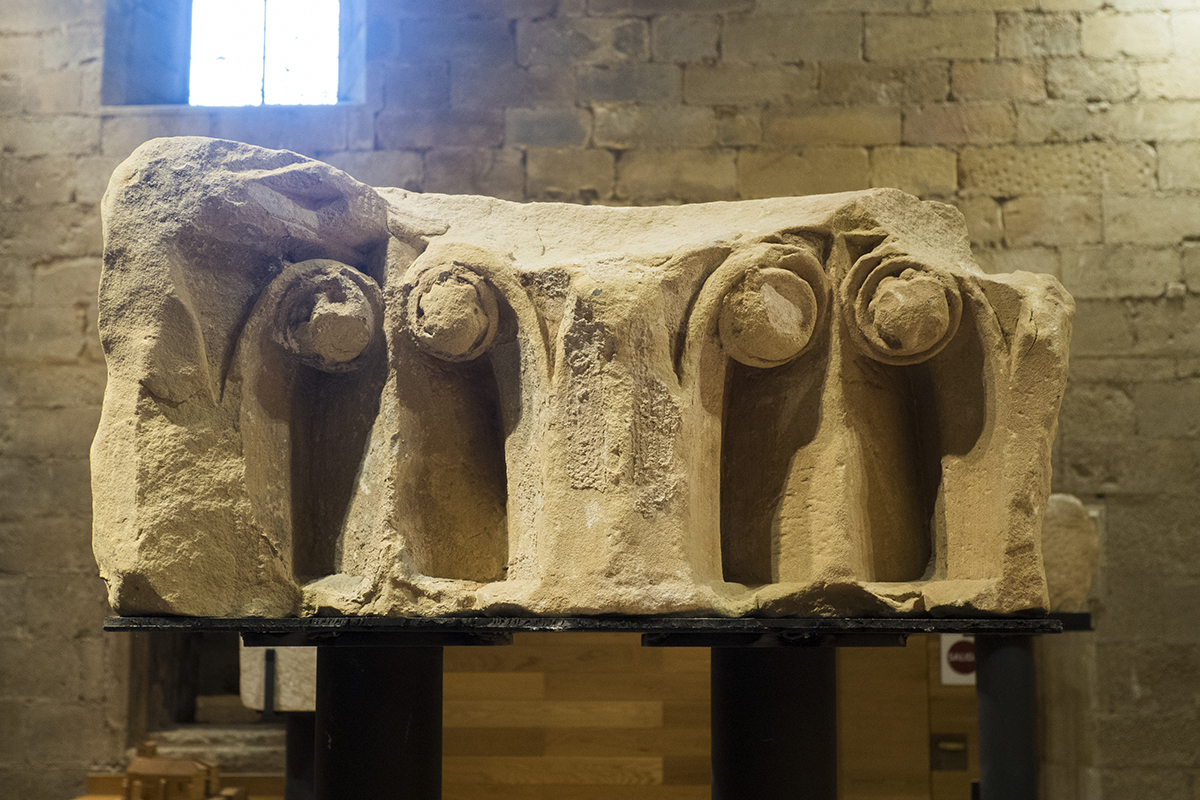
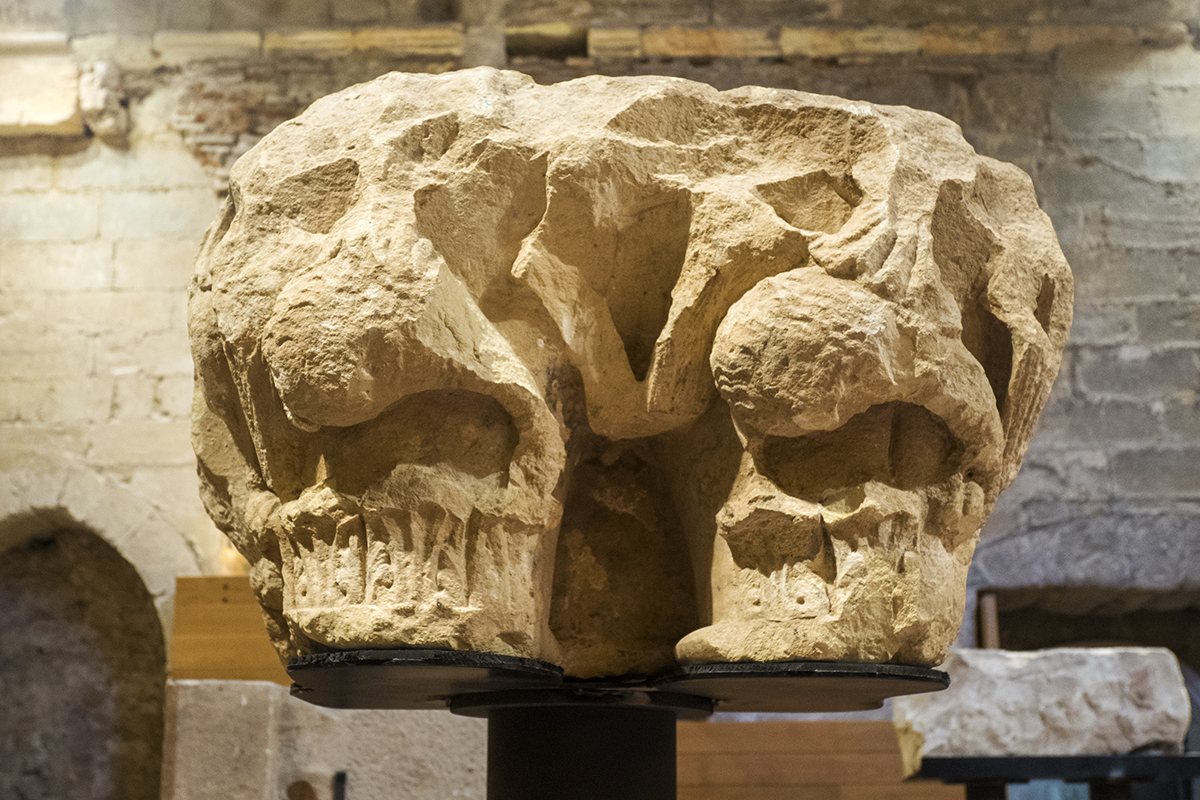
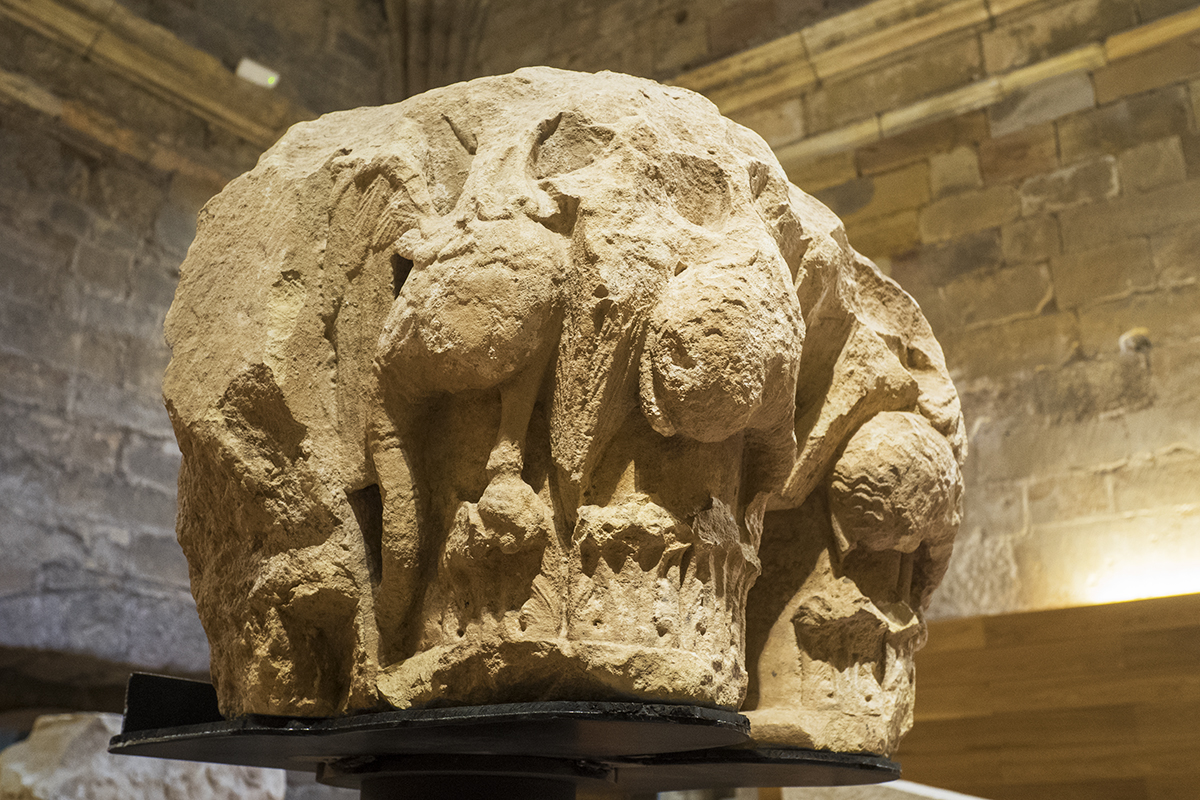
During the different restoration campaigns carried out at the Monastery of Santa María la Real, several architectural fragments have come to light, helping to complete the medieval phases of the complex that have partially disappeared over time. Among them, three capitals of exceptional quality stand out—pieces that take us back to around the year 1200 and point directly to the finest workshops active in the region at that time.
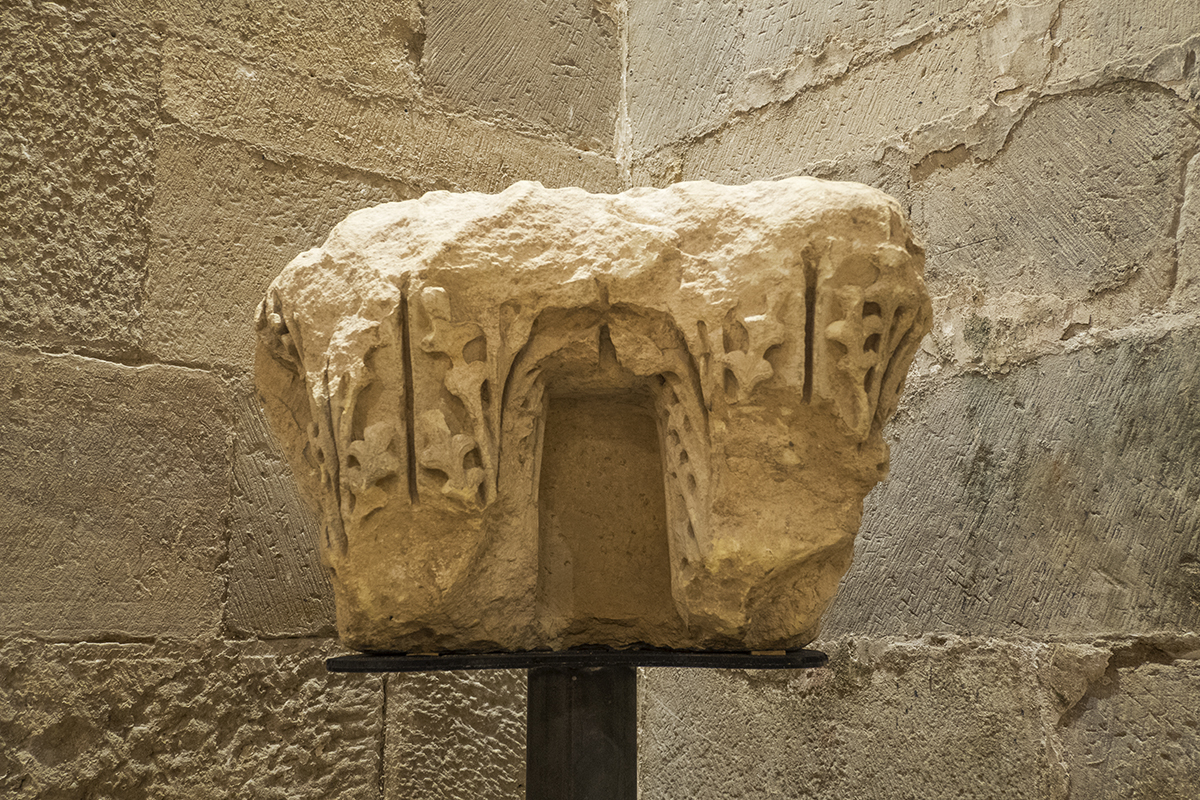
The first is a triple capital carved in sandstone, decorated with vegetal crochets formed by flat leaves ending in volutes. This decorative formula already anticipates solutions characteristic of the Early Gothic and fits perfectly within the building works undertaken by the Premonstratensian monks in the early 13th century, when the chapter house was being constructed and the cloister was covered with ribbed vaults. Both typology and chronology strongly suggest that this capital formed part of that major construction campaign. Its formal language is closely related to the workshops working at the Cistercian monastery of San Andrés de Arroyo, one of the most significant sculptural centres in northern Castile at the time.
The other two capitals, carved in dolomite, reveal an even more refined technical quality. One of them depicts two harpies wearing caps resting upon a level of acanthus leaves; the carving is deep and executed with great precision in both detail and volumetric definition. The third, produced by a master closely connected to the previous one—quite possibly the same sculptor—develops a vegetal repertoire of finely pierced acanthus leaves, worked with a delicacy that demonstrates complete technical mastery.
Both capitals fully belong to the sculptural school that developed around San Andrés de Arroyo. Their specific forms, however, allow for very close parallels with the southern portal of the monastery of Santa Eufemia de Cozuelos, with the capitals of the portal at Revilla de Santullán, and with the western portal of Zorita del Páramo. Within Santa María la Real itself, this same sculptural sensibility can be recognised in some of the capitals of the Abbot’s Chapel, datable to the late 12th and early 13th centuries. These pieces illustrate how the most accomplished workshops of the period were simultaneously engaged in major monastic constructions while also working on rural churches in the surrounding area, spreading a shared formal language that can still be traced today through the stone.